Monday, February 22, 2010

BELIEVE IT OR NOT, I LOVE HOCKEY


ZACH PARISI, TEAM USA

Note: Added Wednesday afternoon: Congratulations to Zach Parisi who scored the two goals in Team USA's 2-0 win over Switzerland today. After the second goal the NBC announcer called him "one of the best players in the NHL" and "the heart and soul of Team USA hockey". Go, Zach! (Also kudos to goalie Ryan Miller for his shutout.) On to the semi-finals!
Anyone who reads my blog regularly is probably shocked to see me posting about hockey. But hockey is in my blood, having attended the University of North Dakota in Grand Forks, a Division I hockey school. I know way more about hockey than about US football (boring!!).

I won't tell you exactly how many years ago it was, but I first started attending UND Sioux hockey games in the old UNHEATED "barn". That took dedication. I actually met my husband-to-be after a hockey game, when my girlfriends and I went to the Gaslight Lounge to thaw out. (Yes, I met my husband in a bar, and it has lasted all these years.)

By the time Dan and I returned to Grand Forks after a three-year hiatus, UND had built the new Engelstad Arena, and Dan and I were game regulars in that comfortable, shirt-sleeve-wearing environment. I had graduated by that time, but Dan was a student and so we sat in the student section, where all the action was. This was the time when most of the UND hockey players were Canadians and it was a very rowdy sport. A common occurrence was to see rubber chickens tossed onto the ice, or if we were playing the University of Wisconsin Badgers, a real dead badger. We could look forward to lots of fights breaking out, especially with Wisconsin players, or those from the University of Minnesota, our biggest rivals.

I must admit, old meek and mild me enjoyed watching these fights. When dozens of gloves dropped on the ice, it was a signal that a brouhaha was about to begin! I think I must have gotten rid of a lot of frustration, vicariously! After Dan left school, we bought season tickets, but instead of sitting in our assigned seats among the "oldsters", we still gravitated to the student section. As our friends graduated and moved away, we used our seats, but it was never as much fun.


JONATHAN TOEWES, TEAM CANADA

Over the years, the UND Sioux hockey team has won seven, count 'em, seven Frozen Four national college hockey championships and played in many others. When they won the 7th, they naturally had to bring out shirts that said "Magnificent Seventh."

UND hockey has changed over the (too) many years since I attended my first game. Now, a majority of the players are American. Minnesota led the way with home-grown hockey players, but North Dakota schools were also building their hockey programs and turning out excellent players. While fights have not been totally eliminated, today's hockey is way more gentlemanly than in days past. Now, the team plays in the glorious, state of the art, new Ralph Englestad Arena, which I have never been in.

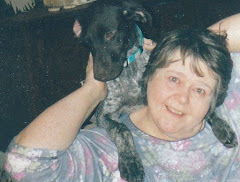
Yesterday, Team USA met Team Canada on Olympic ice, with Team USA winning. I was torn as to which team to root for, because two former UND players were competing against each other. Jonathan Toewes (pronounced Taves), shown above,  is originally from Winnipeg, Manitoba, Canada, and now plays for the Chicago Black Hawks. He is on Team Canada. Zachary (Zach) Parisi (shown at the top of the post), grew up in Faribault, Minnesota, and now plays for the New Jersey Devils. He is on Team USA. Both teams will be playing again, so good luck to both Toewes and Parisi!


MONIQUE (L) AND JOCELYNE LAMOUREAUX

Now we must focus our attention on the Team USA women's hockey players, especially two members. Monique and Jocelyne Lamoureaux grew up in Grand Forks! Both have already been instrumental in helping Team USA advance. The Twins, or the Lams, as they are called, are 20-year-olds and are described as "virtually identical, with virtually identical skills and virtually identical stats."

An Internet article on cleveland.com states: "Their dominance is no surprise. The twins grew up playing hockey on a frozen creek near their house with their four older brothers. Mom Linda would blow a whistle when it was time to come in, and she would chastise the girls for complaining if the boys were too rough. Says Monique: "If we ever cried, my mom would say, 'You'd better toughen up.'"

Monique and Jocelyne are attending the University of Minnesota right now, and are members of the U of M hockey team, but both are transferring to UND and will play for them next season. Woot!

All four of the twins' brothers are involved in hockey, and two of them are associated with UND. Pierre-Paul is an assistant UND hockey coach, and Mario is a UND forward who scored several goals this past weekend in UND's sweep of the University of Minnesota-Duluth. Their father, Pierre, was a UND goalie for the national championship teams in 1980 and 1982. Sports Illustrated magazine recently featured the entire Lamoureaux family. Good luck Monique and Jocelyne!


DAVE CHRISTIAN

Of all the UND Olympians past and present, Dave Christian is my utmost favorite. A member of the Miracle on Ice Team that unexpectedly defeated the powerhouse Russian team in 1980 (and went on to win the gold medal), he was outshadowed in the media by other players who gained more notoriety. But we didn't care, Davey was one of our own. Christian, from Warroad, Minnesota, is a member of a US hockey dynasty. The Christian Brothers are famous for their hockey exploits and for their manufacture of the primo Christian Brothers hockey stick. After UND, Christian played for the Winnipeg Jets, the Washington Capitals, the Chicago Black Hawks, the Boston Bruins and the St. Louis Blues.

I doubt that any hockey games still to come in the 2010 Olympics will be as dramatic or as crucial as the Miracle on Ice game, but I will be enjoying them and the fact that unlike most viewers I know all about faceoffs, icing, cross checking, high sticking and the like.

Thursday, February 18, 2010

CELTIC LENT


Growing up Lutheran and attending a small village church, I didn't have much opportunity to celebrate Lent. There was certainly no pastor available to come around for a mid-week Lenten service. We never had ash put on our foreheads and we were never asked to give up anything precious for Lent.

A Minnesota woman recently wrote to me saying she was in charge of doing some Lenten programs at her Protestant church and wanted to know if I could give her some information on Celtic Christianity and Lent. I replied that my study of the Celts (limited as it is) has been devoted to the pre-Christian Celts. I did recommend two great books that I own: "Anam Cara: A Book of Celtic Wisdom" by John O'Donohue and "366 Celt: A Year and a Day of Celtic Wisdom and Lore" by Carl McColman. (The latter book encompasses both pagan and Christian Celtic wisdom.)

Intrigued by her idea, I searched the web and found some other books and some links that I thought might prove helpful to her. One link, especially, spoke to me. It is the website of author Joyce Rupp, who is a  member of the Servites (Servants of Mary) community.

In a section of the site called "Celtic Crossovers: May The Lent Of The Irish Be With You", Rupp suggests seven ways "to let Celtic spirituality be your guide this Lent".

I think these "stepping stones for our spiritual growth", as Rupp describes them, could be beneficial for anyone, Catholic or Protestant, Christian or not, as we slog through the rest of winter and anticipate the coming of spring.

I especially liked three of these Celtic aspects and am printing them below. (I am glad she substituted the word Creator for God at certain places. I think we could also substitute Spirit or Goddess as well, or any name by which you address your Creator.)

THE PRESENCE OF GOD IN THE ORDINARY

"Every aspect of Celtic life was approached as an opportunity for union with the divine. The Celts believed that God permeated every part of their life, and they sensed this presence everywhere. Their faith assured them that God was lovingly concerned about each of their daily moments, no matter how ordinary or mundane.

"There is evidence of this especially in the Carmina Gadelica, a marvelous resource of prayers and blessings that Alexander Carmichael collected in the 19th century during his 60 years of travel among Celtic people in the western Scottish islands. These prayers are filled with the Celts' ordinary moments. They sang and prayed while they were working at outdoor tasks such as fishing, herding sheep, and milking cows or indoors with the household duties of kindling the hearth, weaving cloth, cooking, and cleaning. From rising to sleeping, from birth to death, they embraced God in their lives.

"We can do the same. The setting for our prayer is different from that of the Celts, but, like them, we are immersed in ordinary events and God is still in our midst. Our Celtic praying today can be about such things as sitting at computers, traveling on expressways, going to the supermarket, watching football games, or caring for children . . .

"I recently suggested to a young father that he bless his three small children each day. He looked surprised and said, "Can I do that? I thought only priests could bless. How would I do it?" I described how the Celts easily extended blessings and assured him that each of us can and ought to also entrust our loved ones to God each day. I explained that all his blessing needed was the loving touch of his hand on his children and a brief "May God and the angels guide, guard, and protect you this day (or this night).

"Lenten practice: Choose one thing that you do everyday such as brushing your teeth, getting dressed, turning on your computer, eating, rising from bed in the morning, or going to sleep in the evening. As you do this action, pause to remember that God is with you. Do this every day for the entire six weeks. Or choose to bless your children each morning and evening."

Here is a poem by Rupp celebrating the presence of God in the ordinary:

A CELTIC MOMENT

"In the milking of cows and tending the hearth,
in threading the loom and gathering the peat,
the breath of prayer blessing each movement,
a naming of Creator upon each mindful deed.

Not in our kingdom of busyness,
not in our land of lost simplicity,
yet the Celtic grace of looking deeply
and the Celtic faith of believing fully
lives on enduringly within each of us,
beseeching our beholding.

Like the unceasing prayer of Celts,
an ancient call to gather the ordinary,
savor the sacrament that lies within,
bless whatever life offers to us
in the routine, the mindless, the duty,
the cherished, the surprising, the serene.

Let our open gaze fall faithfully
over a stretch of hurried days,
see among their swiftly moving pieces
a story threaded with touch of Divine.

Celtic moment, Soul moment, Sacred moment,
in simple task or thin veil of mystery,
whatever our day brings we can bless,
whatever our lives hold we can reverence.

Gather all to our soul:
the silent sparkle of untamed moments,
the hurried haze of endless duty,
the silky joy of surprising experience,
the shadowed grasp of unwanted pain.

Recover the lost cloak
of Celtic rhyme and Celtic rhythm,
put on the rich garment
of intentional communion,
embrace the commonness of life
woven on the endless loom of the Holy."


DISCOVER THE GOODNESS OF CREATION

"The Celts were deeply wedded to nature. It was through creation that divinity was most manifest for them. They experienced a oneness with God in hills, stones, springs of water, caves, and many other parts of creation. In a manner reminiscent of the Hebrew psalms, cosmic elements such as the stars, sun, and moon are threaded through Celtic prayers of petition, praise, and blessing. They call out to the "son of the dawn, son of the clouds"; they behold the "lightener of the stars" and celebrate "thou bright white moon of the seasons.

"Many of us today live within the walls of home, work, and recreation, rarely venturing far into the world of creation unless it is a special outing to the beach, park, or a sporting event. Even those who work outdoors or spend time there recreationally often fail to give attention to the sacredness of the created world. Yet creation offers a wonderful opportunity to enter into oneness with the Creator. All it takes is a deliberate turning of the heart and a desire to be present to the wonders inherent in nature.

"Lenten practice: Make a deliberate effort to listen to the created world each day. Pause to look at a plant or gaze at the moon. Pay attention to the falling snow or the first new buds on a branch. Notice the clouds or the shape of a flower. Listen to the sea or the sound of the wind. Receive the deeper messages hidden in these gifts of creation."
 
 
SILENCE AND SOLITUDE
 
"The Celts valued silence and solitude in their simple, ascetic rural lifestyle. Sometimes individuals chose to live in very remote areas where they could experience a deep and strong bond with the ruggedness of land and sea. It was here that they most knew the mystery of creation and the Creator.

"Silence and solitude clear out the complex cobwebs of our daily rushing and provide a space in which to renew the purpose of our relationships and our work. It is hard to find silence and solitude where most of us live now. These valuable requirements of spiritual growth are not easily available to us. However, we can find reflective spaces if we are intent on doing so by turning off the car radio, watching less television, or turning inward when we are engaged in activity that allows for inner quiet such as spending time in the garden, working on the car, commuting on the train or bus, or going for a walk or other forms of exercise. While we do these things we can intentionally turn toward the divine presence within us and around us.

"Lenten practice: Choose a time once a day where you can have a time for stillness and quiet listening."


For all seven of Rupp's Lenten stepping stones, go to:

http://www.thefreelibrary.com/Celtic+Crossovers:+May+the+Lent+of+the+Irish+be+with+you-a071251635

Here is a link to the full texts of the Carmina Gadelica:

http://www.sacred-texts.com/neu/celt/cg1/index.htm.


Monday, February 15, 2010

TAKING REFUGE IN BOOKS

This sultry, risque lady is my daughter's profile "photo" on Facebook. I do believe the part about curling up with a good book for a well-rounded education (could I make a pun and say "broad" education? Sorry, Kristen!), but I have never curled up with a bad librarian. Well, I guess I could admit that I curled up with a librarian, at least when she was a little girl, because my daughter is a librarian. But then again, she is not a bad librarian. She is a very good librarian. She is the director of serials and fast-track processing in the library department at Catholic University of America in Washington, DC.

I have been a bad blogger, and bad blogging friend, since the beginning of the year. Rather than blogging and commenting, I have been reading. I have read 17 books since the beginning of the year, and have reviewed all but two on my book blog, "Julie's Bookshelf". (http://www.juliesbookshelf.blogspot.com/).

The latest book I reviewed was "Acedia: Monks, Marriage and Me" by Kathleen Norris. In my review, I printed this quote from the book:

"We may look to physicians or therapists, when our lives go off track, or we may pray the Psalms, or take refuge in a favorite novel. But in a sense we are all seeking the same thing. We want to prepare a good soil where grace can grow; we want to regard the cracks and fissures in ourselves with fresh eyes, so that they may be revealed not merely as the cause or the symptom of our misery but also as places where the light of promise shines through."


~ "Acedia and Me", Kathleen Norris

When my life has gone off track in the past I have looked to both physicians and therapists, and they have responded, first with the little pill called Prozac prescribed by my GP, then with Celexa prescribed by a psychiatrist, plus counseling provided by a social worker and light box therapy to combat my SAD (Seasonal Affective Disorder). And all have helped in the past.

But now, I have no insurance, which means that I continue with the Celexa on a maintenance schedule, thankfully at a relatively low cost. I had a physician's med check a couple of months ago, but there are no more visits with psychiatrists or social workers.

I wish that praying the Psalms helped me, as it does with "Acedia and Me" author Kathleen Norris. But while I do consider myself a spiritual being I suffered a crisis of faith a couple of years ago and now am not quite sure how to categorize myself along the spectrum of faith and religion. But even so, in previous times my prayers always consisted of begging: "God, please GIVE ME . . . "

Although I did not consciously think of it that way until reading "Acedia and Me", perhaps what I have been doing since the New Year is "taking refuge in a novel" (or non-fiction reading).

This year, at least, I do not know any other way to proceed. To live with SAD in any year is to be bound up in a cocoon not of one's making. As a newspaper reporter in the 1990s, I well remember lifestyle guru Faith Popcorn's concept of cocooning - a return to home and hearth.

With most cocoons, one expects for the occupant to eventually burst forth into vibrant spring as a butterfly. But this year, the cocoon binds me up. It chokes me and threatens the very essence of my life.

I have been unemployed for eight months. The onset of winter this year signaled not only the sadness inherent in the term SAD, but also the panic of ever being employed again at the ripe old age of 60.

In the many, many days since I last had a meaningful job, I have done all the things I ever wanted to do given some time off. I have cleaned, and sorted, and thrown away. I can no longer garden. Art is lost to me. TV is indeed that "vast wasteland". What writing I have done is confined to Blogger. I have discovered the ennui of unoccupied days, and the despair of anything ever being "right" or "normal" again.

So now I fill the void with books, and by writing about them, I hope to leave some sort of mark - the wild animal's spoor, as it were - that I did exist in this vast arboreal forest in the dead time, the dead season; that there was indeed life inside the cambrium if not in the bark.

All I can hope is that grace has been growing in me all these days, and that it will come to fruition with the return of the light. I am trying mightily to "prepare a good soil where grace can grow".

Saturday, February 6, 2010

THE LIBRARY


Cozy, warm, good reading lamps, overstuffed chair, the perfect library!

For you book lovers out there, do you usually buy your books or do you get them from the library or borrow them from friends? If you own the book, do you keep it or pass it on (or - shudder - toss it out)?

I have a lot of books, to put it mildly. When our previous home burned, the firemen remarked on how many books we owned, and that was only a fraction of what we have now. Many people coming to our home for the first time mention in a semi-shocked voice at how many books there are.

I have mainly chosen to buy my books and, obviously, keep them. At one point, I belonged to half a dozen book clubs and bought  new hardcover books at bookstores. But as my coffers emptied, I started buying books at the used bookstores and on amazon.com. Then I started purchasing them only at thrift shops (although some of those charge as much as used book stores do.) Now, I am reduced to borrowing them from the library.


This could be a bookshelf in my house.

I know, reduced is too strong a word. But I actually don't like the library. Not the Bismarck Public Library, anyway. (Hope no one from Bismarck reads this!) I like the public library in Mandan, Bismarck's sister city across the Missouri River. Although it is not in its original building, it is still in an old brick building and is warm, inviting and comforting. Bismarck's Library, however, is too modern, too cold, too sterile, and has too many books.

Yes, too many books. Whenever I try to browse for books there, I feel overwhelmed and give up. So unlike my first library, the Crosby, ND, Library, just a small building with a couple of rooms. I would go straight to the fiction section and start browsing. There weren't too few books, and there weren't too many either. It was just right, as Goldilocks would say.

I bet the old Bismarck Public Library was a cool place. I love old brick libraries with wooden reading tables and chairs, and librarians who stamped the books by hand. I was a librarian at Columbus High School in my junior year (during study hall) and loved it. I was extremely angry when the new English teacher took "my" job away from me in senior year and gave it to another girl. I'm surprised I didn't turn out to be a librarian. (My daughter did, though!)


Oops!  Time to get a new bookcase!

But the main thing I dislike about our library is that it never has the books I want! Yesterday is an example. I went with a list of 15 books and came home with four. They didn't have a copy of "The Winter House" (Nicci French), nor "The Absolutely True Diary of a Part-Time Indian" (Sherman Alexie), nor "Howards End is on the Landing: A Year of Reading at Home" (Susan Hill), nor "The Sonnets" (yes, they had Shakespeare's sonnets but not the Warwicke Collins' novel). They didn't even have a copy of "The Prime of Miss Jean Brodie" (Muriel Sparks)!

Six of the books I wanted were checked out (this happens to me all the time). So I went home and went online to reserve them. There is just one person ahead of me on the list for "The Yellow-Lighted Bookshop: A Memoir, a History" (Lewis Buzbee) and also just one for "The Blue Tattoo: The Life of Olive Oatman (Women in the West)" (Margot Mifflin). There are two waiting for "Remarkable Creatures" (Tracy Chevalier). That's not bad. But five people ahead of me for "Wolf Hall: A Novel" (Hilary Mantel) and six people for "The Swan Thieves" (Elizabeth Kostova) is a bit much. And 26 in line for "Half-Broke Horses" (Jeannette Walls). OMG I'll never get it!!!

What books did I end up with then? 1. "The Zookeeper's Wife: A War Story" by Diane Ackerman. 2. "People of the Book" by Geraldine Brooks. 3. "Travels With Charley" by John Steinbeck. It's for an on-line book club I've joined. I had read it years ago and was pleased to get the chance to re-read it. 4 . "A Brief History of Montmaray" by Michelle Cooper. I learned about this book from Loretta on the "Pomegranates and Paper" blog. Thanks, Loretta. It was a ripping good yarn, as they say. I started it last evening and already finished it this morning. It will be reviewing it soon on my book blog.


That beautiful bow-window is what sold me on this
comfortable, intriguing-looking home library.

It shouldn't take me too long to read the other three. After that I'll have to put my patience cap on and wait for the others to come in. Or, I can do as the author of "Howards End is On the Landing" set out to do. Her aim was to read only the books in her own home for a year. "Howards End" is of course the famous novel by E. M. Forster. (P.S. For you grammarphiles out there, there is no apostrophe in Howards in either book title.)

This is what amazon.com says about Hill's book: "This is a year of reading from home, by one of Britain's most distinguished authors. Early one autumn afternoon in pursuit of an elusive book on her shelves, Susan Hill encountered dozens of others that she had never read, or forgotten she owned, or wanted to read for a second time. The discovery inspired her to embark on a year-long voyage through her books, forsaking new purchases in order to get to know her own collection again. A book which is left on a shelf for a decade is a dead thing, but it is also a chrysalis, packed with the potential to burst into new life. Wandering through her house that day, Hill's eyes were opened to how much of that life was stored in her home, neglected for years. "Howards End is on the Landing" charts the journey of one of the nation's most accomplished authors as she revisits the conversations, libraries and bookshelves of the past that have informed a lifetime of reading and writing."

I certainly could do that. There are so many books I have meant to re-read, beginning with "Rebecca" and on to "Jane Eyre", "Wuthering Heights", "The Grapes of Wrath", and so many, many more. And then there are the books I bought at thrift shops or used bookstores because they were cheap and looked interesting. There are those I discarded after a few pages or a chapter. I should give "Wicked" (Gregory Maguire) another try. And "Gentlemen and Players" too (Joanne Harris - I usually love her books.) Then there are the second and third books in a series (like Rosalind Miles' Isolde trilogy). But it's been too long since I read book one and I'd have to re-read that too! Kristen has left books here also, like "Pope Joan" (Donna Woolfolk Cross).

But no! 2011 will have to be my Year of Reading From Home. This is going to be my "Year of
 Reading From My 'A' List". And hopefully I'll get "Half-Broke Horses" by Christmas!

Here's an interesting link from a post on Cornflower's Blog Blog which discusses the pros and cons of patronizing the library:


This looks like a library in an English country home.
I adore this look. I especially love putting as many
pictures on the walls as you can fit in. I do that!

~~~~~~~~~~~~~~~~~~~~~~~~~~~~~~~~~~~~~~

ADDED LATER: Janet's comment reminded me that I had wanted to add a bit more to this post. I wanted to describe my ideal home library. I have often dreamed of putting an addition on to the back of my house. It would, of course, have wall-to-wall, floor to ceiling bookshelves, made of some darkish but not-too-dark wood with lovely trim at the top. I would give my library an English cottage theme, with forest-green walls and accents of dark blue and burgundy. The chairs would for the most part be leather club or overstuffed chintz, so I could tuck my legs up underneath me while reading, but there would be a smallish table with wooden chairs for breakfasting, perusing the morning papers, or, Jane Austen-like, writing letters.

There would, of course, be a fireplace flanked by wing chairs, a big wooden antique desk and lots of floor lamps. (I can no longer read in the evening without my reading glasses and a good standing lamp.) My prized Scottish castle oil painting would hang over the fireplace. There would be a vast oriental rug and big hassocks on which to sit or prop one's legs, or for use as a coffee/tea tray.  The TV would be banned but certainly there would be some sort of sound system for soothing classical music. Any wall space that was not filled with bookshelves would be jammed with paintings, botanical prints, hunting dog prints and my etchings of buildings. There would definitely have to be a real dog lolling about on the carpet for company. And to be sure, there would be accessories like statuettes, some lovely pieces of china, a globe, perhaps an armillary sphere and other interesting bits and bobs.

Tuesday, February 2, 2010

CANDLEMAS/IMBOLC/BRIGHID'S DAY


"GODDESS BRIGID" by Galaxis Mist

~~~~~~~~~~~~~~~~~~~~~~~~~~~~~~~~~~~~~~


Today a guest blogger takes over. She is a young woman of ancient times. She is a healer and herbalist and lives with her tribe in southern Britannia.

She lives alone in a thatched hut at the edge of the village. For companionship she has her owl, Cailleach, and her little pony, Rhiannon.

Aine spends her time gathering and drying herbs and flowers for medicines. Many sick people come to her to heal their maladies.

She is in training to be a Druidess, and has special powers which allow her to scry into a fire or into water to see events in the future.

~~~~~~~~~~~~~~~~~~~~~~~~~~~~~~~~~~~~~~~~~~~~

Aine of the Celts here ~

I am pleased to be here to tell ye about one of our most important days in our Wheel of the Year. Today is Imbolc, the Midwinter Festival that is one of our four major holidays. It falls exactly halfway between Yule, the winter solstice, and Ostara, the spring equinox. Here in Britannia, snowdrops are peeking through, the first sign of spring. Ravens are building their nests, and larks are singing overhead.

Sheep are also lambing, and they give this holiday its name. It marks the onset of lactation in ewes soon to give birth. Imbolc means "in the belly (of the mother)". Another name for Imbolc is Oimelc, which means "ewe's milk". With the lambs comes milk, our first fresh food of the season.

Today is sacred to the Goddess Brighid (also spelled Bride (pronounced Breed), Brigid, Brigit, Bridget, Briganta, Brigan, Brid and other variations). Her name means Bright One, High One or Bright Arrow. In Scottish Gaelic, her day is "La Fheill Brighide". In Irish Gaelic, it is "La Fheile Bride".


"WHEEL OF THE YEAR - IMBOLC", by Patricia Ariel

Brighid is the goddess of healing, which makes her special to me, a healer. However, she is a Triple Goddess, being also the goddess of poetry and the goddess of smithing (blacksmithing, goldsmithing, metalsmithing and household crafts).

Purification and fire are important aspects of this feast. The lighting of fires today represents the return of warmth and the increasing power of the sun. Another name for this day is "The Feast of the Waxing Light". The presence of Brighid reminds us that the strength of women is manifest in the invincible fire that burns steadily through the heart of winter, no matter how dark and cold the world.
For us Celts, the success of the new farming season is of great importance. At this time of year, our precious food stores are getting low. We perform Imbolc rites to harness Brighid's divine energy so as to ensure a steady supply of food until the harvest in six months.


"IMBOLC" by Galaxis Mist

Women and girls make Bride dolls and beds and decorate them prettily with beads, shells and flowers. They also make Brighid crosses. These go on our home altars.

Other sacred rituals include blessing our seeds and decorating and consecrating our farming tools. We clear the fields and sprinkle ashes on them. We leave offerings of bread, milk, grains and seeds for Brighid. We clean and purify our homes and light new hearth fires dedicated to the goddess. From these, we start a giant outdoor bonfire. We set torches alight and circle the fields in procession. Afterward we hold a great feast.

Bridghid is also associated with sacred wells. On this day, Calleach, the ancient hag, bathes in her sacred well and becomes Bride the maiden. Brighid has a holy well in Kildare, Ireland. The Sacred Flame at the well is kept by 19 virgin priestesses called Daughters of the Flame. No man is allowed near the well, and the preistesses do not consort with men.
 

 "BRIGID: SAINT AND GODDESS", Artist Unknown

Catholic nuns now tend Brighid's sacred flame. As I peer into the future, I see that Brighid is one of the few Celtic goddesses who survived after the days of us pagans. Her sway over Ireland was so strong that the Church "borrowed" her and turned her into a saint. The Christians say that St. Brigit (or Brigid) was the daughter of a Druid who was converted and baptized by St. Patrick. 

This day is also celebrated by the Christian church as Candlemas, the day to bless all the candles that will be used in the following liturgical year. It is also called the Feast of the Purification of the Virgin Mary.

Imbolic/Brighid's Day is a time of rebirth and inner transformation, of inspiration and creativity. I hope you experience all these today.


"IMBOLC", Artist Unknown

~~~~~~~~~~~~~~~~~~~~~~~~~~~~~~~~~~~~~~~~~~

NOTE: I wrote this post last year. I re-printed it this year but used different images of Imbolc and/or Brigid. Since I used so many images last year, I was afraid I wouldn't find enough for this year, but I did!

If you would like to see a bunch more images, please visit these two links from 2009:
http://celticanamcara.blogspot.com/2009/02/artist-unknown-aine-of-celts-here-on.html.
http://celticanamcara.blogspot.com/2009/02/images-of-imbolic.html.

Did you spot all the symbols for Brighid in today's and last year's images? These include snowdrops, fire/light/sun, white candles (and candle crowns), sacred wells, the wolf (February is the wolf moon in Britain), the swan, the snake, pregnant women to symbolize fertility, sheep and lambs, brooms or spinning wheels in honor of the keeper of the hearth, a white cow with red ears, arrows, spears, the new moon and Brighid's cross.


"CANDLEMAS" by Yvette Vetjens

Whether you celebrate it as Candlemas, St. Brighid's Day or Imbolc, enjoy this day and take cheer that we are halfway on the wheel between the shortest day of the year and the spring equinox.

Monday, January 25, 2010

SCOTTISH TINKERS AND TRAVELLERS


"GYPSIES" by Hablot Knight Browne

When I wrote my post "The Scottish Connection" I mentioned that my Scottish Great-Aunt Teenie used to love it when the tinkers came 'round, so that she could practice her Gaelic on them. Reading "5 Precious Things", the blog by my Scottish friend Ruthie, I came across the term tinkers again. Ruthie mentioned that she had read two books about these unique Scotsmen and women.

Fascinated, I decided to do some research on the tinkers and learned to my horror that they are a much-maligned segment of Scottish society. The first thing I learned is that "tinker" (tink/tinkie) is no longer an accepted term. In fact, it is pejorative and derogatory. So is gypsy or gypo, another label which has been falsely assigned to them. The very word tinker (also tinkler) is often commonly used to disparage someone of dirty appearance or untidy and antisocial habits. But contrary to popular belief, tinkers highly value cleanliness and have a definite moral code.

The confusion arises because there are actually more than a half dozen types of traveling people in Scotland, consisting of diverse, unrelated communities speaking a variety of different languages and holding to distinct customs, histories and traditions. (In using their titles I am going to continue with the Scottish spelling of "travellers" even though it bothers my American eye - and Spell Check doesn't like it either. My usage of the term "tinker" is meant to be very respectful).

The groups are the afore-mentioned Highland Scottish Travellers, Lowland Scottish Travellers, Irish Travellers, Border Gypsies, Fairground Travellers, New Age Travellers, and the Roma Gypsies (or Romany/Romanichal).

The New Age group is self explanatory. The Fairground Travellers (also called Fun Fair Travelers or Showmen) move around with carnivals and fairs and would probably equate with what we derogatorily call "carnies" in America. The Roma are members of a tribe that originated in Northern India long ago and spread throughout all of Europe. They are the traditional Gypsies, a shortening of the misnomer Egyptians.


Highland Scottish Travellers of old

Highland Scottish Travellers, while perhaps one of Europe's last nomadic people, are not Roma Gypsies. They are distinct from them ethnically, culturally and linguistically. They are indigenous, Gaelic-speaking people.  In Scottish Gaelic they are known as the Ceàrdannan ("the Craftsmen"). The word tinker itself comes from the Gaelic "tinceard" or tinsmith. Poetically known as the Summer Walkers, they also are referred to as traivellers, traivellin' fowk and nawkers.  

Summer Walkers are closely associated with the Northwest Highlands, and many of the families carry clan names like Macfie, Stewart, MacDonald, Cameron, Williamson and Macmillan. They would pitch their bow tents at the edge of villages and earn money there as tinsmiths, hawkers, horse dealers or pearl fishermen. Many found seasonal employment on farms, e.g. at berry picking or during harvest. They also brought entertainment and news to the country folk.

The Highland Scottish Traveller community has a long history in Scotland with records going back to the 12th century. They share a similar heritage with, although distinct from, the Irish Travellers. As with their Irish counterparts, there are several theories regarding the origin of Scottish Highland Travellers, one being that they are descended from the Picts. Other theories are that they were excommunicated clergy, or families fleeing the Highland potato famine or the pre-Norman-Invasion.


Tinkers in front of their traditional bow tent

Tinkers were a vital part of the rural scene of the past. In the early years of the 20th century they were a familiar sight in the Highlands. Traveling in small family groups, they roamed both the highways and the back roads, sometimes with ponies and carts to carry their gear, often with handcarts, sometimes wheeling their worldly goods in old-fashioned prams. Dogs trotted at the tail of the carts and were lifted up beside the bairns (babies) when they were tired.

The tinkers' camps were to be seen in sheltered spots throughout the glens and straths. They knew the terrain as intimately as town dwellers know their local high street, particularly which houses would give them a welcome and which houses should be avoided.

The menfolk repaired pots and pans and made horn spoons, willow baskets and clothes pegs for their wives to sell. In addition to seasonal work on the farms, many dealt in scrap iron, and a few fished the rivers for fresh water pearls to sell. The women peddled, or hawked,  their wares - household goods and crafts.


Caption reads Colin {and} Clementine MacDonald -
traditional family who follow the whelks
Spring to Autumn from Angus to West Highlands

Scottish Travellers have a secret cant, or language, the Beialrearich, which has never been written down. It is a complex mixture of Scots and Gaelic, some of it archaic, with a sprinkling of Romany. This allows the tinkers to switch nimbly to cant in the presence of even Gaelic-speaking strangers, a skill that was useful when they were questioned about suspected theft or poaching.

Sadly, all traveling people have been given a bad reputation, thanks to some of their number. True Scottish Highland Travellers were often erroneously perceived to be thieves, liars, shysters, con men, beggers, fortune tellers and the like. Country folk often projected their fear of "gypsies" into tales of how they kidnapped children.

In a horrifying reversal of this, tinkers believed that they were perpetually threatened, young and old alike, by the prospect of abduction to the dissecting rooms of medical schools. Stories were told of relatives who had unaccountably disappeared, said to have been snatched by the "noddies", top-hatted medical students who drove the black "burkers" (doctors') coaches through the countryside at night in search of their prey. It is little wonder that the tinkers refused to leave their old people and children unattended when in the hospital.

Certainly Scotland has not always been kind to tinkers, leaving them suspicious not only of hospitals but also of wary of strangers and officials. Under 17th Century Scottish law, to be a gypsy was a capital crime punishable by hanging! "Egyptians" were ordered to "quit the realm within thirty days on pain of death". The famous outlaw and fiddler James MacPherson was executed under this statute.

Even when free from all hints of reproach, the name tinker signifies people whose way of life makes them outsiders. A contributory factor to their isolation is the Scottish climate, which is less than suitable for a nomadic lifestyle because of its harsh winters and unpredictable rain and wind at any season of the year. 


Some photos I found did not distinguish between
different types of Scottish travelers. With their gaily
decorated "Gypsy" wagon, these women may be Roma.

Recent changes in the economic structure of society have made both the tinkers' old way of life, and their ability to earn a traditional living, more difficult. Rural depopulation means that there are fewer houses at which to call, while the housewives' reliance on mass-produced goods has killed off many of the traditional tinkers' crafts.

Since the 1950s, other aspects of modern life have forced rapid changes on the travelling community. Tin smithing is a dead art, horse dealing a thing of the past, hawking is now done by catalog and supermarket. The majority of Scottish Highland Travellers have settled down into organized campsites or regular houses. They may still travel the roads today, but in smaller numbers and usually in vans and trucks, or what the British call caravans and we in the U.S. call travel trailers and RVs.

As early as WWI some traveling families were beginning to settle for the winter in rented rooms, taking to the road in the spring and returning each autumn so that the children could clock up the obligatory 200 half-day attendances at school. However, most families preferred their tents to what was often substandard housing, and many of the older generation still do.

Many older Travellers were brought up on the road and still remember in detail the traditional, archetypal lifestyle of Scotland's nomadic clans. Some have written books about this lifestyle. Here are the two books by and about Scottish Travellers that Ruthie mentioned in her blog:


"The Yellow on the Broom: The Early Days 
of a Traveller Woman " by Betsy Whyte

Betsy Whyte was born into a family of travellers who roamed the Scottish countryside between the wars. Whyte has been called a terrific storyteller and her recollection of her childhood has been described as vivid. Two later books make up her trilogy of the Travellers' way of life.


"Jessie's Journey: Autobiography of a
Traveller Girl" by Jess Smith

From the ages of 5 to 15, Jess Smith lived with her parents, sisters and a mongrel dog in an old blue bus. They traveled the length and breadth of Scotland, and much of England too.

Here's a link to other books about other Scottish tinkers: http://www.visitdunkeld.com/scottish-tinkers.htm

While Whyte and Smith put their stories in writing, other Scottish Highland Travellers have played an essential role in the preservation of traditional oral Gaelic culture. Their outstanding contribution to Highland life has been as custodians of an ancient and vital singing, storytelling and folklore tradition of great importance.

In the last 50 years folklorists have recorded a large number of tinker ballads, songs and folk tales. Many tinker men are accomplished pipers, whose skill adds to the family income. The folk song revival movement thrust a handful of Traveller singers and storytellers into an unexpected limelight.

It is estimated that only 2,000 Scottish travellers continue to lead their traditional lifestyle on the roads. They are still being fiercely discriminated against today. Those familiar with the Travellers detect an underlying sense of persecution and despair among these people who cherish the traditional ways and values of their forefathers.


Scottish Travellers at the famous
Aikey Brae Fair, Aberdeenshire, 1906

Tuesday, January 19, 2010

THE SCOTTISH CONNECTION


A Highland Croft by Sherry Massey (Sorry scan is
lopsided. In real life everything is perfectly straight!)

Some months ago, I had seen a drawing done by blogger Sherry Massey of "Of Mice and Men and Cabbages and Kings" of a lovely Irish cottage. I asked her if she would do one of a Scottish croft, or cottage, that is a favorite among my Munro family photos. Dear sweet Sherry did this for me, free of charge. I love it all, especially the detailed work she did, such as on the thatched roof, the stone wall on the right, and the Munro tartan border. And note that she added the name Munro above the doorway! It is a drawing that I will treasure forever!


My maternal grandfather, Duncan Munro,
not long after his arrival in Canada.

Those you who have read my blog regularly know I am fanatic about my family history. After writing posts about my maternal grandmother's roots in Norway, and several posts about my maternal great uncles who were killed in WWI, I was told by readers that I am very lucky indeed to have as much information and as many photos as I do of my ancestors and their relatives.

I now realize that our family is truly blessed to have the knowledge that we do. For it's not just my side of the family. Dan knows his maternal grandmother Sudie Sheppard's family history all the way back to North Carolina and Virginia in the 1700s. (I joke to Dan and Kristen that they are descendants of Johnny Rebs.) Kristen could join the DAR but I can't. My people weren't even in the country at the time!

When I am finished working on it, Kristen's family tree will have many limbs. Only two branches have been truncated: that of my Irish paternal grandmother, Hazel Joanna Cody, and Dan's paternal grandfather, Hans Fredericksen.

Hazel Cody's family has been traced back to John and Bridget Cody, born in Southern Ireland in the 1830s. There, the trail ends, and I'm not the least bit surprised. For how many John and Bridget Codys were born in Southern Ireland, County Unknown, in the 1830s?

As for Hans, he had a shady past as a cattle rustler in North Dakota. Dan's Dad was ashamed of him and cut all ties to him, making it difficult to trace his ancestors.

Yes, we are blessed. But it is not luck. It is through the determination and hard work of our relatives that our genealogical records are so complete. A distant cousin of Dan's researched the Sheppard family. On my mother's side, my cousin Kevin has been searching the Norwegian Wangens and my Scottish second cousin Shirley has done a tremendous job searching the Munros. On my biological father's side, my second Cousin Mark has done the work on the Rockey-Cody families.


Grandpa Duncan in his military uniform

My collection is the most complete on the Munro side. So here I present some photos of my relatives from the Highlands of Scotland (some owned by my mom's family, some provided by Shirl) all the while thanking the powers that be that I have them.

Above, my Grandfather Duncan Munro in his "The Sun Never Sets on the British Empire" uniform, complete with sword and kepi helmet. Far from a romantic posting in India, Duncan was safely ensconced in Canada. This exotic-looking uniform is actually that of the much tamer Canadian Rifles. Duncan immigrated to Canada before the outbreak of WWI. As he put it in a much later newspaper interview, he had joined up and was chafing to go off to war when the conflict ended.


My Scottish Great-Grandmother, Hughina Munro

I have to say, Hughina looks like a sweetie, the quintessential grandmotherly figure. She lived to be 95 years old. After her husband died she was left to raise 10 children alone. She lived until 1951, two years after I was born. I don't know if she knew of the existence of an American great-granddaughter, Duncan having died two years before.

My Great-Grandfather, William Munro, for whom no photo exists, was a shepherd known as Willie Go Slow, because of the asthma which restricted his physical activities and led to an early death.


Christina Isabella ("Teenie") Munro Clinton

I love the fact that I know about my great-grandfather's nickname. I love the fact that I know my Great Uncle Donald Munro ran away from home. Charged with herding sheep, Donald abandoned them and stowed away on a boat bound away from Scotland, leaving the sheep to the two sheepherding dogs. All had to all be rounded up when Donald's absence was noticed. Supposedly he went to Canada, but all trace of him vanishes after that.

I love the fact that I know that Great Aunt "Teenie" (shown above) loved it when the tinkers (itinerant peddlers/tinsmiths) came 'round so that she could practice her Gaelic on them.  Really, it's just a couple of generations removed from the time when my ancestors spoke Gaelic!


Golspie Football (Soccer) Team
William Munro is second from right in rear

As I mentioned before, I have written extensively about my three great uncles who died in or as a result of the Great War. But before the war, they had quite ordinary lives. Above, a photo of my Great Uncle William's football (soccer) team. What a tall, dark and handsome guy he was. Like myself, he was a journalist. Unlike myself, he was a terrific athlete.


John Alexander "Jack" Munro

I have often lauded Jack, a certified, genuine war hero who was posthumously awarded the British Military Cross for his many acts of gallantry. But before he entered the war, he too, was an athletic, handsome young man about to taste all the fruits life had to offer.


Jack's Grace

While I've written lots about Jack, I have neglected to write about Jack's Grace. That's what I call her: "Jack's Grace". This photo was found among Jack's effects. It's signed "Ever Yours, Grace". That sounds like quite the commitment to me. Was this jaunty, sporty, Highland girl with the dog and the braids Jack's sweetheart? Would she and Jack have been married had he survived the war? Among all photos in the Munro collection, this one is the most bittersweet to me.

In fact, I have in general neglected to write about the female side of the Munro family in favor of the male side. I hope to recifty that now. How could I leave out Archie's Grace? Yes, another Grace. Grace Williamson Fowler of Edinburgh, married to my Great Uncle Archie. They had immigrated to Canada and already had several children before Archie went off to war and was gassed and captured as a German POW. After he was repatriated and sent to Switzerland to recover, Grace joined him there.


"Archie's Grace" and children

Archie barely survived. After a recovery period in Switzerland and later in Edinburgh, he and Grace moved to the United States. Sadly, Archie died in Chicago in 1921, the same year the youngest of his six children was born.  Grace had to finish raising the children herself, just as my Great Grandmother Hughina had had to do.


Elsie ("Eppie") Munro Morrison Kidd

How I adore this photo of Great Aunt Eppie. Because I assumed the pedestal beside her was a trunk, I always picture her as the confident, experienced world traveler off to visit the Continent!


Jessie Mackenzie Munro Watters

And Great Aunt Jessie - somehow I feel the most kinship with this female member of the family, perhaps because she is so obviously intent on reading in this photo. She looks very neat and scholarly!

Mary  Munro Mackay

Great Aunt Mary Munro Mackay was another of my grandpa's sisters, and grandmother of my dear Scottish second cousin Shirley Sutherland, who sent me most of these pictures and all the info on the Scottish Munros. Another link I have to this Mary Munro is my late Aunt Mary Munro of Crosby, ND, obviously named after Duncan's beloved sister. 


Elizabeth "Betsy" Angusina Munro
(A cutout of the photo below)

As you can see, Betsy's middle name was Angusina. She and my Great-Grandmother may have been named after an Angus and a Hugh, but I don't know if -ina was pronounced "EYEnuh" or "EEnuh". Since I had an aunt named Ina (pronounced "EYEnuh) I lean toward the former.

My Grandpa Duncan and Grandma Julia had seven children: William Alexander, Donald Cameron, Myrtle Opal (my mom), Robert James, Mary Elaine, Ina Mae and David Allan. Obviously, it was their Scottish father, not their Norwegian mother, who named the children.

Since I grew up in a Norwegian community, I savor these names, such a wonderful (in my mind) contrast with the Oles and Svens, Lars and Ingas I was surrounded by. I also relish the names of my earlier Scottish forbears: MacKay, MacDonald, MacKenzie, Sutherland, Falconer, Campbell, Ross. So different from the Johnsons, Larsons, Olsons and Swensons in our community.

I admit it. I'm just besotted with my Scottish ancestors.


And here it is, full circle, the croft that inspired Sherry Massey's painting. I told Sherry that she could leave the people off and I think that she was very relieved to do so! The people in the photo are Betsy's sons Donald and Alick on the left with dog Minto in front, Betsy, her husband Alex Mackay (called Daddo in the photo) and son William on the right.

(P. S. Everytime I look at this photo I think that the roof is on fire - see top right - but it must not have been, noting the calm demeanor and expressions of everyone in the photo, a lack of concern certainly shared by the photographer!)